Recreating the Shared Experience
of Live Comedy in a Digital Space
Role
UX/UI Researcher and Designer (End-to-end)
Timeline
3 months – 2023
Background & Challenge:
During the pandemic, stand-up comedians and audiences lost the shared environment and, real-time energy and environment that makes live comedy feel alive.
Solution:
Live Interactive Comedy Club (LICC) is a live-streaming prototype designed to recreate the atmosphere of a comedy club through real-time audience interaction, allowing people to perform, watch, and react together from anywhere.


Identifying market gaps
To understand the current stand-up comedy landscape, I analyzed two well-established comedy platforms in Sweden: The Laugh House and RAW.
The goal was to identify which user needs were already being met and where opportunities for innovation existed.
Three key gaps identified:
• No support for remote livestream comedy shows
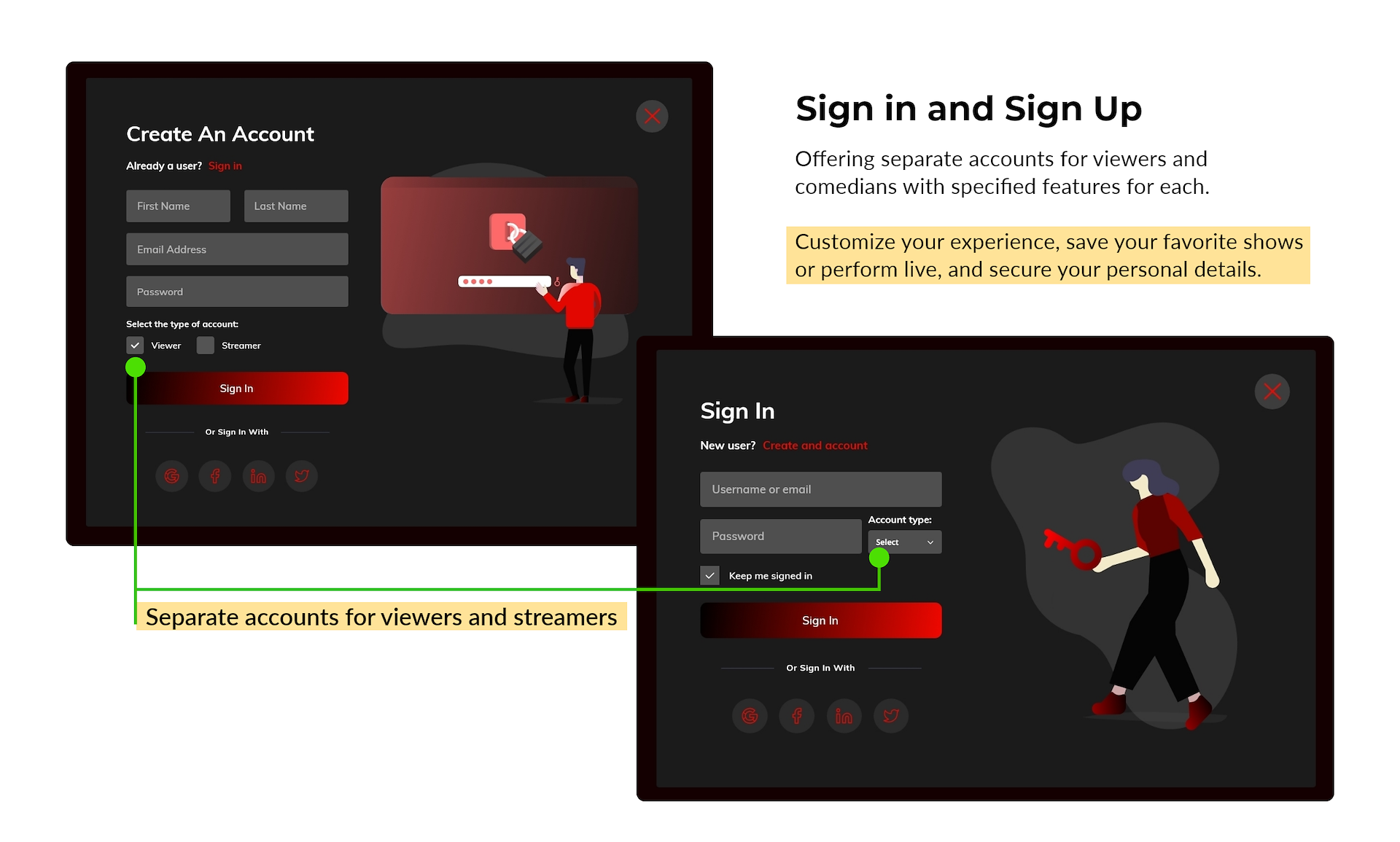
• No separate login or tailored experience for comedians and viewers
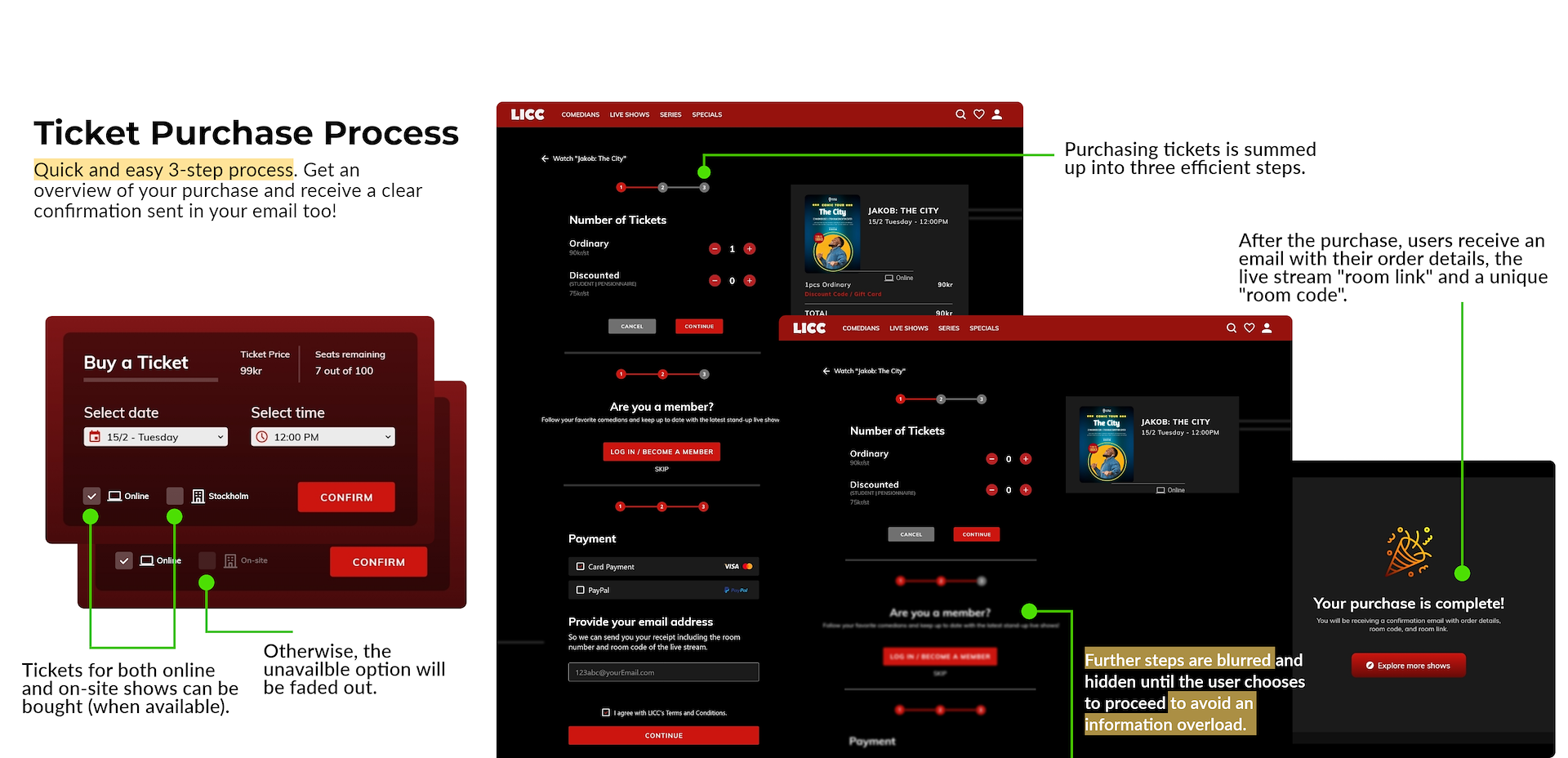
• No unified ticketing system that supports both on-site and online show

Understanding user needs and pain points
We interviewed five frequent stand-up comedians and live show spectators to understand their current frustrations and expectations.
Three key insights:
• Live comedy depends on real-time feedback
Comedians rely heavily on audience reactions (laughter, timing, energy). Without this feedback, online performances felt awkward and less authentic.
• Existing online shows feel passive for spectators
Spectators described livestream comedy as “watching a video” rather than attending a live event, due to limited interaction and presence.
• Comedians and spectators have overlapping but different needs
While both value interaction and atmosphere, comedians need performance and promotion tools, whereas spectators prioritize discovery and participation.

Defining the product direction
Based on market and user insights, the platform focused on three core features:
1. Integrated Livestream System 🎬
Eliminated reliance on third-party tools to create a seamless, immersive experience in one place.
- 2. Separated Accounts for Comedians and Spectators 👨👩👦👦
- Designed role-specific features, such as performance tools for comedians and interaction features for audiences.
- 3. Built-in Ticketing for On-site and Online Shows 🎫
- Reduced friction by keeping discovery, booking, and viewing within the same platform.
Designing early concepts and iterations 🎨
Brainstorming
& Early Exploration
The goal of the early design phase was to identify and prioritize the core features needed by both comedians and spectators, while ensuring their experiences remained distinct. Initial exploration focused on key areas such as show discovery, live stream rooms, and navigation.
I began with quick sketches to explore layout ideas and interaction patterns without committing to visual detail.

Wireframes & Prototyping
As the project progressed and collaboration became fully remote, I transitioned to digital wireframes in Adobe XD to iterate more efficiently with the team.
Given the limited timeline, I adopted a minimalistic approach, prioritizing only the most essential features needed to support live interaction and reduce cognitive load during performances. Once the core structure was established, I created mid-fidelity wireframes and an interactive prototype to validate flows before moving into higher fidelity design.


Usability Testing & Iterations
I conducted usability testing throughout the design process, with three rounds of scenario-based tests involving five participants. Tasks focused on critical user flows such as discovering a show, joining a live performance, and interacting during the stream.
By doing this, I was able to gather valuable feedback from our users, which helped us identify areas for improvement. Based on the feedback, I made design changes and improvements to our product to ensure that it met the needs and preferences of our users, as seen below.

Final solution
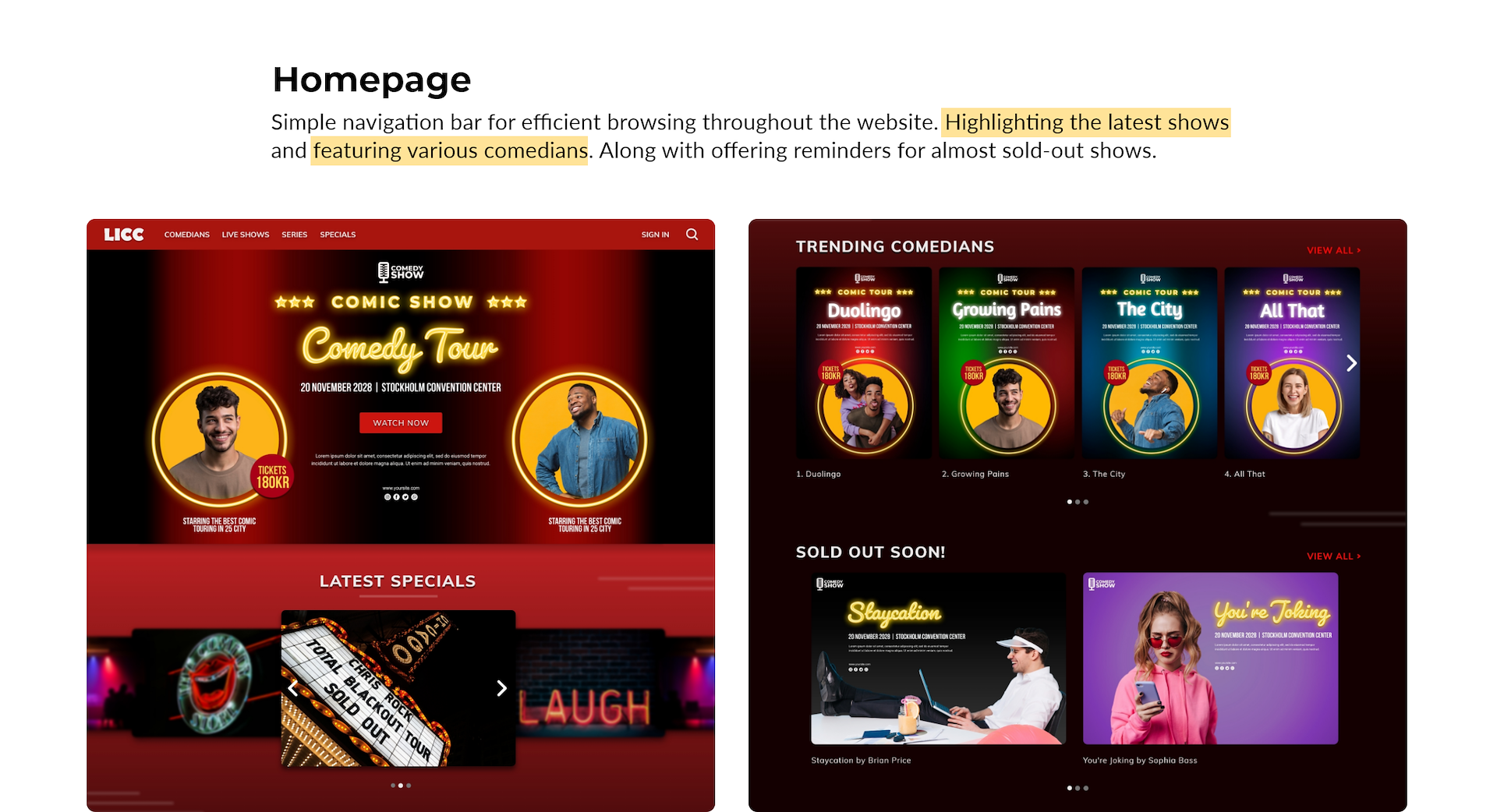
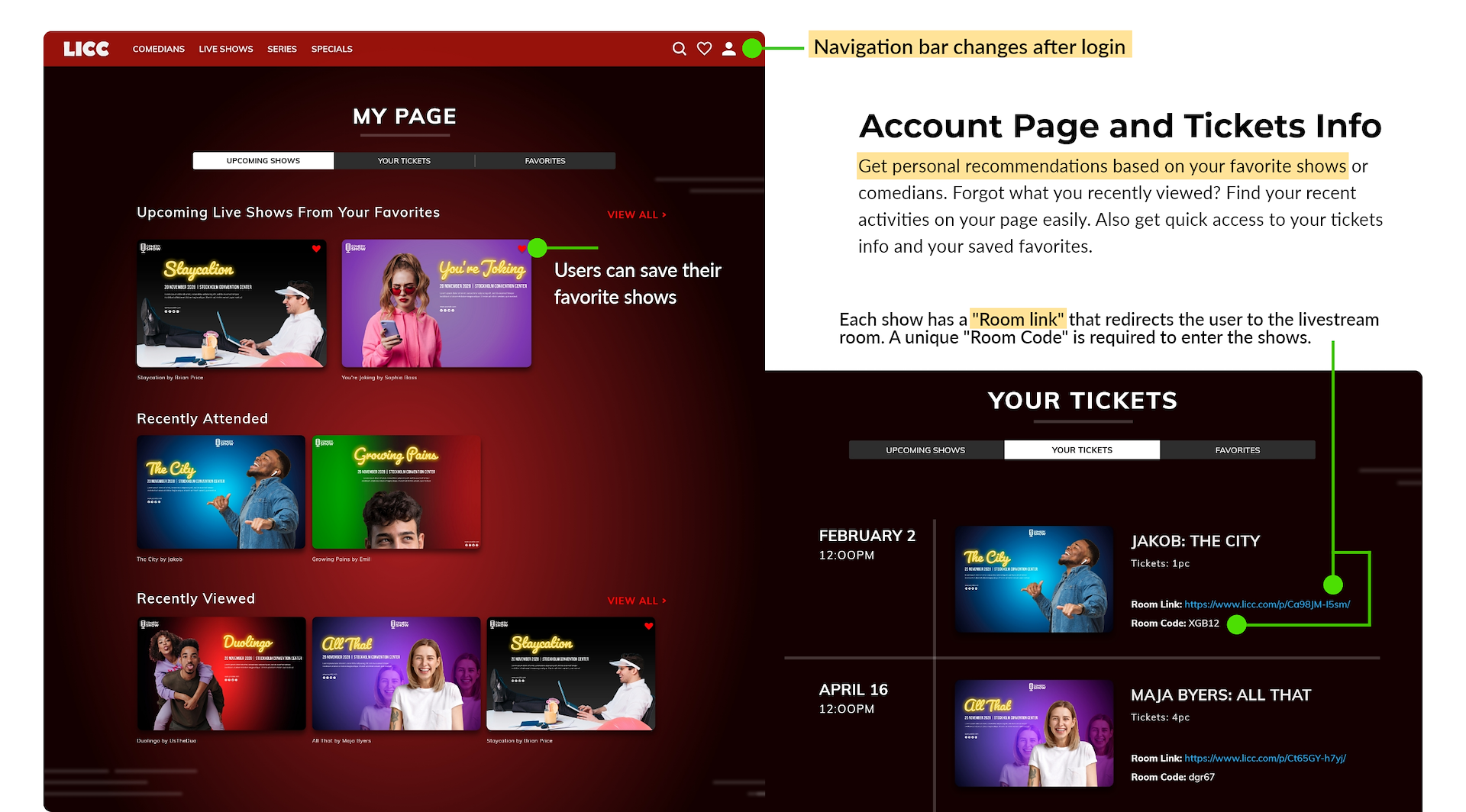
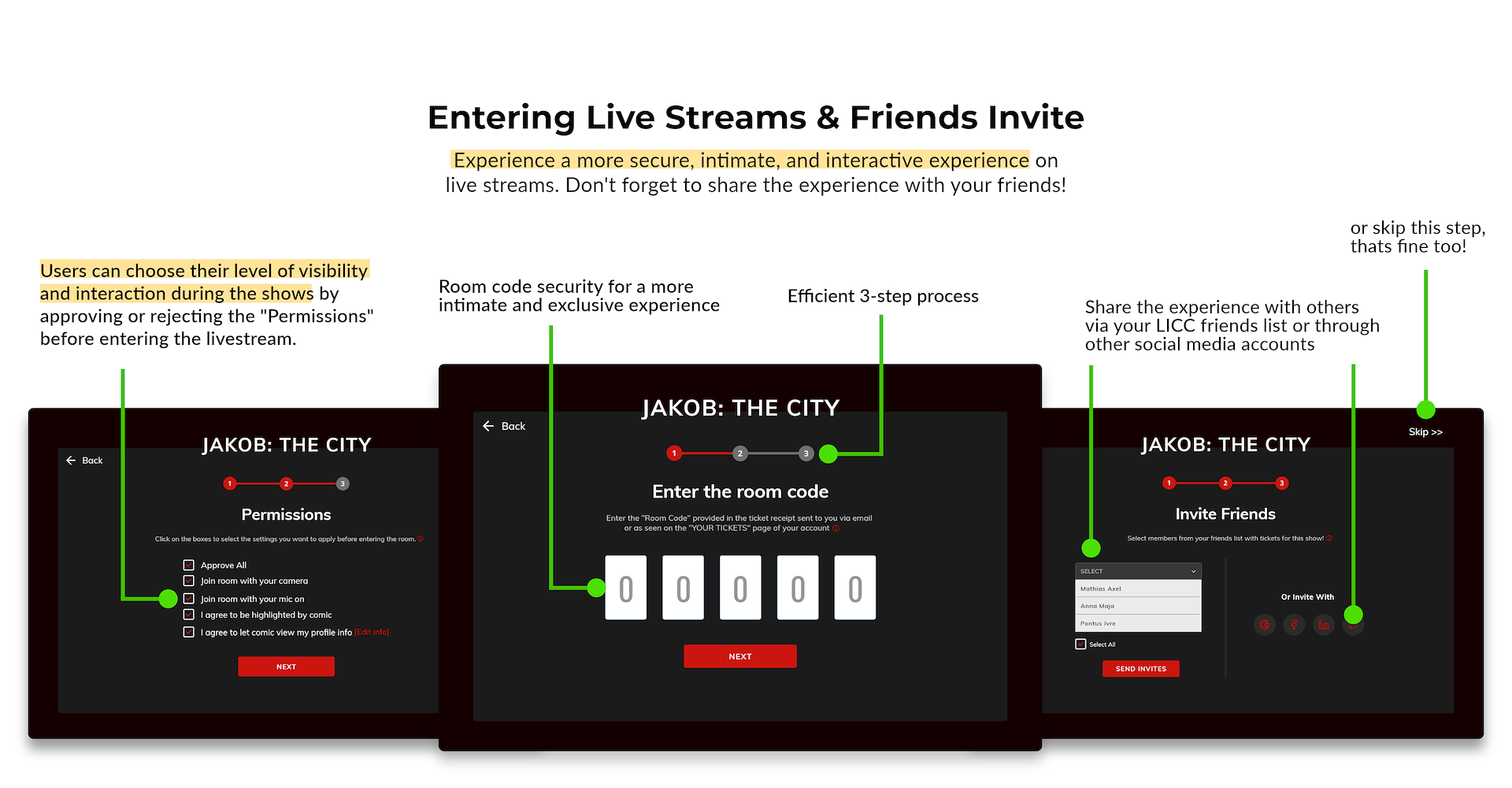
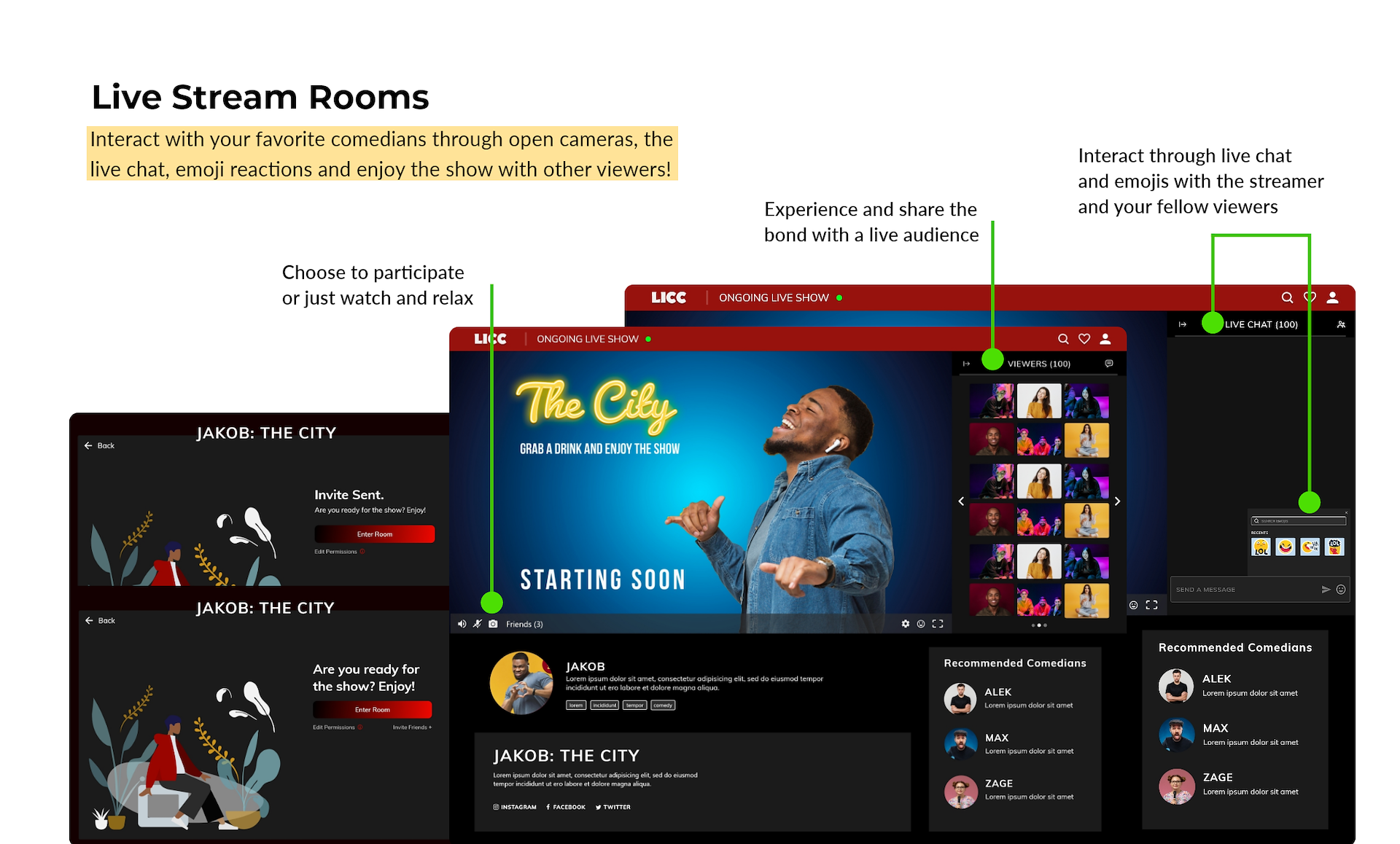
Overview of redesigned screens with annotations
Key Takeaways 💡
1. Working within time constraints improved my decision-making.
The limited timeline pushed me to prioritize essential features, make clearer trade-offs, and focus on what delivered the most value for users.
2. Revisiting and redesigning older projects offers valuable perspective.
Redesigning this project allowed me to identify gaps in my earlier thinking and apply new skills and insights gained through continued learning.
col 4 placeholder
Thanks for reading
For any questions or even just a chat, contact me at lasin.meryl.ann@gmail.com or on my LinkedIn 😁
